Teaching phonics can be tricky! The English language has 44 sounds, or phonemes. These can be made by combining more than one letter to make another sound as well. Understanding the different phonics sounds empowers children to decode words, improving their reading and spelling abilities. In this blog post, we will provide you with a comprehensive phonics sounds list along with examples for each sound.
You can get our full phonics sound charts!
Click here to purchase on TPT.
Click here to purchase on Missing Tooth Grins.
Consonants

The first type of phoneme is consonants. These can be voiced or not voiced. A voiced sound means it is hard, unlike a whisper. For example, /b/ is voiced and /f/ is not. When introducing the sounds of these letters, it’s important to teach your students the sound of the letter explicitly. For example, we would teach that p says /p/, rather than all the sounds that p can make, like /f/ in graph.
Here are consonant sound examples:
- /b/ as in “bat”
- /c/ as in “cat”
- /d/ as in “dog”
- /f/ as in “fish”
- /g/ as in “goat”
- /h/ as in “hat”
- /j/ as in “jam”
- /k/ as in “kite”
- /l/ as in “leaf”
- /m/ as in “moon”
- /n/ as in “net”
- /p/ as in “pen”
- /q/ as in “queen”
- /r/ as in “rain”
- /s/ as in “sun”
- /t/ as in “top”
- /v/ as in “van”
- /w/ as in “wet”
- /x/ as in “box”
- /y/ as in “yarn”
- /z/ as in “zip”
Vowels

Another type of phoneme is vowels. When teaching vowel sounds, we teach the short vowel sound.
Here are examples of vowel sounds:
- /a/ as in “cat”
- /e/ as in “bed”
- /i/ as in “sit”
- /o/ as in “dog”
- /u/ as in “sun”
Digraphs

Digraphs are two letters that come together to represent a single sound, creating a unique phonetic unit within a word. are examples of digraphs:
- /ch/ as in “chat”
- /sh/ as in “ship”
- /th/ as in “thumb”
- /ph/ as in “phone”
- /wh/ as in “when”
- /ck/ as in “duck”
- /kn/ as in “knight”
- /dge” as in “judge”
- /tch/ as in “witch”
- /wr/ as in “write”
Blends

Blends are two consonants combined together. Here are some examples:
- /bl/ as in “black”
- /br/ as in “brown”
- /cl/ as in “clap”
- /cr/ as in “crab”
- /dr/ as in “drive”
- /fl/ as in “flower”
- /fr/ as in “frog”
- /gl/ as in “glow”
- /gr/ as in “grass”
- /pl/ as in “plane”
- /pr/ as in “prize”
- /sc/ as in “scare”
- /sk/ as in “skip”
- /sl/ as in “slide”
- /sm/ as in “smile”
- /sn/ as in “snake”
- /sp/ as in “spoon”
- /st/ as in “star”
- /sw/ as in “swim”
- /tr/ as in “truck”
R-Controlled Vowels
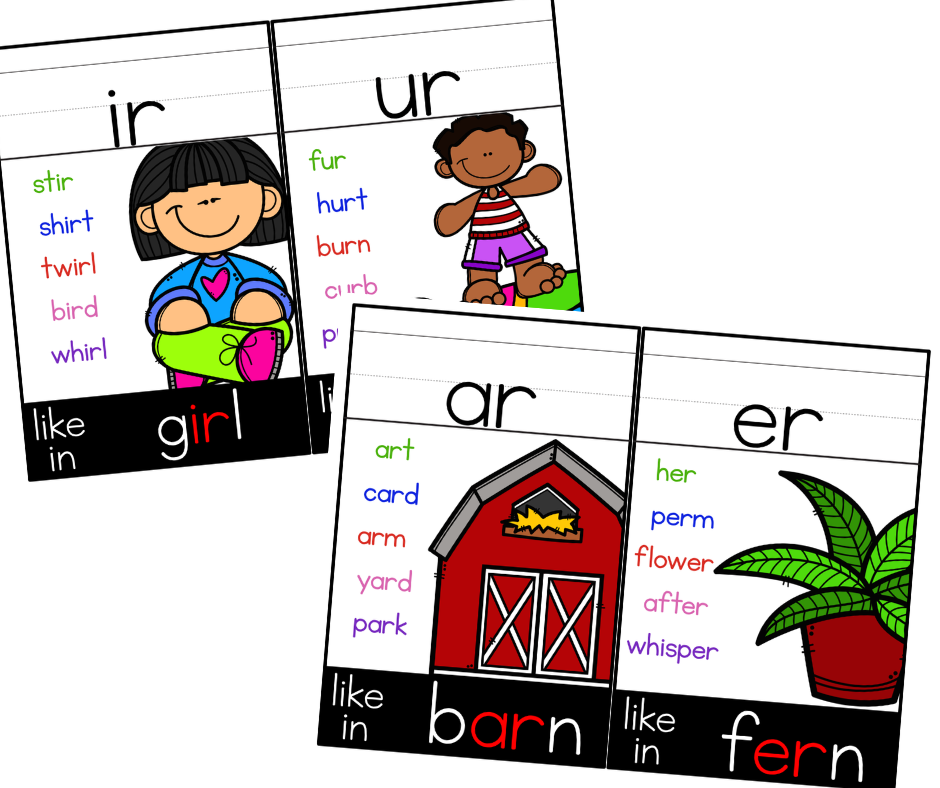
R-controlled vowels are vowel sounds in which the pronunciation is influenced or altered by the presence of the letter “r” in the same syllable, resulting in a new sound. Here are examples:
- /ar/ as in “car”
- /er/ as in “her”
- /ir/ as in “bird”
- /or/ as in “fork”
- /ur/ as in “fur”
Diphthongs

Diphthongs, or vowel teams, are 2 vowel sounds together to create a sound. Diphthongs are two vowels that blend together to form a single sound. Examples are:
- /ai/ as in “rain”
- /ay/ as in “day”
- /oa/ as in “boat”
- /ea/ as in “bean”
- /ow/ as in “flow”
- /ow/ as in “cow”
- /au/ as in “launch”
- /aw/ as in “saw”
- /oi/ as in “boil”
- /oy/ as in “boy”
- /oo/ as in “book”
- /oo/ as in “boot”
- /ou/ as in “found”
- /ew/ as in “new”
- /ui/ as in “fruit”
- /ey/ as in “key”
- /ie/ as in “cookie”
- /ie/ as in “tie”
- /igh/ as in “light”
Trigraphs

Trigraphs are three letters working together to represent a single sound. Examples are:
- /scr/ as in “scrape”
- /shr/ as in “shriek”
- /spl/ as in “splash”
- /spr/ as in “spring”
- /squ/ as in “squid”
- /thr/ as in “throw”
Mastering phonics sounds is an essential step in the journey toward becoming a proficient reader and speller. This comprehensive phonics sounds list provides a solid foundation for understanding the various sounds in the English language. Remember, practice is key when it comes to phonics, so encourage regular reading and word-building exercises.
Phonics Charts For Your Classroom
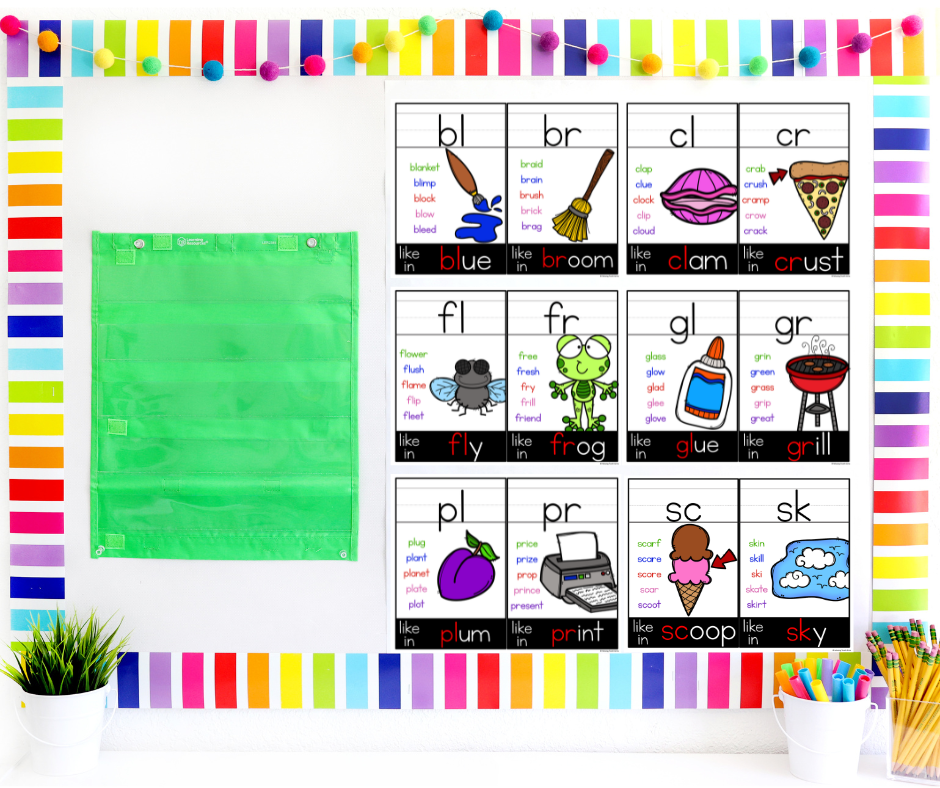
Take your phonics teaching to the next level with these phonics posters! These vibrant visuals can hang in your classroom to help both you and your students with teaching and learning these phonics sounds.
Click here to purchase on Missing Tooth Grins.
Click here to purchase on TPT.
Related Posts:
A Phonics Scavenger Hunt: A Quick Win For Phonics Instruction
Phonics Assessment Can Be Easy. Here’s How!